

Hear from Our Customers
You’re not imagining it. Those persistent headaches, the musty smell in the basement, the allergy symptoms that won’t quit—they could all point to mold growing somewhere in your Oxford Valley home.
Professional mold testing tells you exactly what you’re dealing with. Not guesses. Not maybes. Lab-verified results that identify the species, the concentration levels, and where the problem is hiding.
Pennsylvania’s humid climate creates perfect conditions for mold growth, especially in Bucks County where precipitation has increased up to 10% in recent years. That extra moisture doesn’t just disappear—it settles into crawl spaces, behind walls, and under flooring where you can’t see it.
Testing catches problems early, before they turn into expensive remediation projects. Before your kids develop asthma. Before black mold damages your home’s structure. The average mold remediation costs between $1,100 and $3,300, but catching it early through testing can keep you at the lower end of that range—or prevent it from spreading in the first place.
We provide certified mold inspection services throughout Bucks County, including Oxford Valley and the surrounding Philadelphia region. We’re licensed by Pennsylvania to conduct professional mold assessments—a legal requirement that ensures you’re working with qualified inspectors, not just someone with a moisture meter.
Here’s what matters: we don’t do the remediation work. That means our testing results aren’t inflated to create bigger jobs. You get honest, independent analysis from EPA-certified labs with no conflict of interest.
Our team knows the local climate challenges Oxford Valley homeowners face. We’ve seen what happens when homes built in the 70s and 80s trap moisture. We understand how newer construction in the area sometimes sacrifices ventilation for energy efficiency. That local knowledge means we know exactly where to look and what to test.
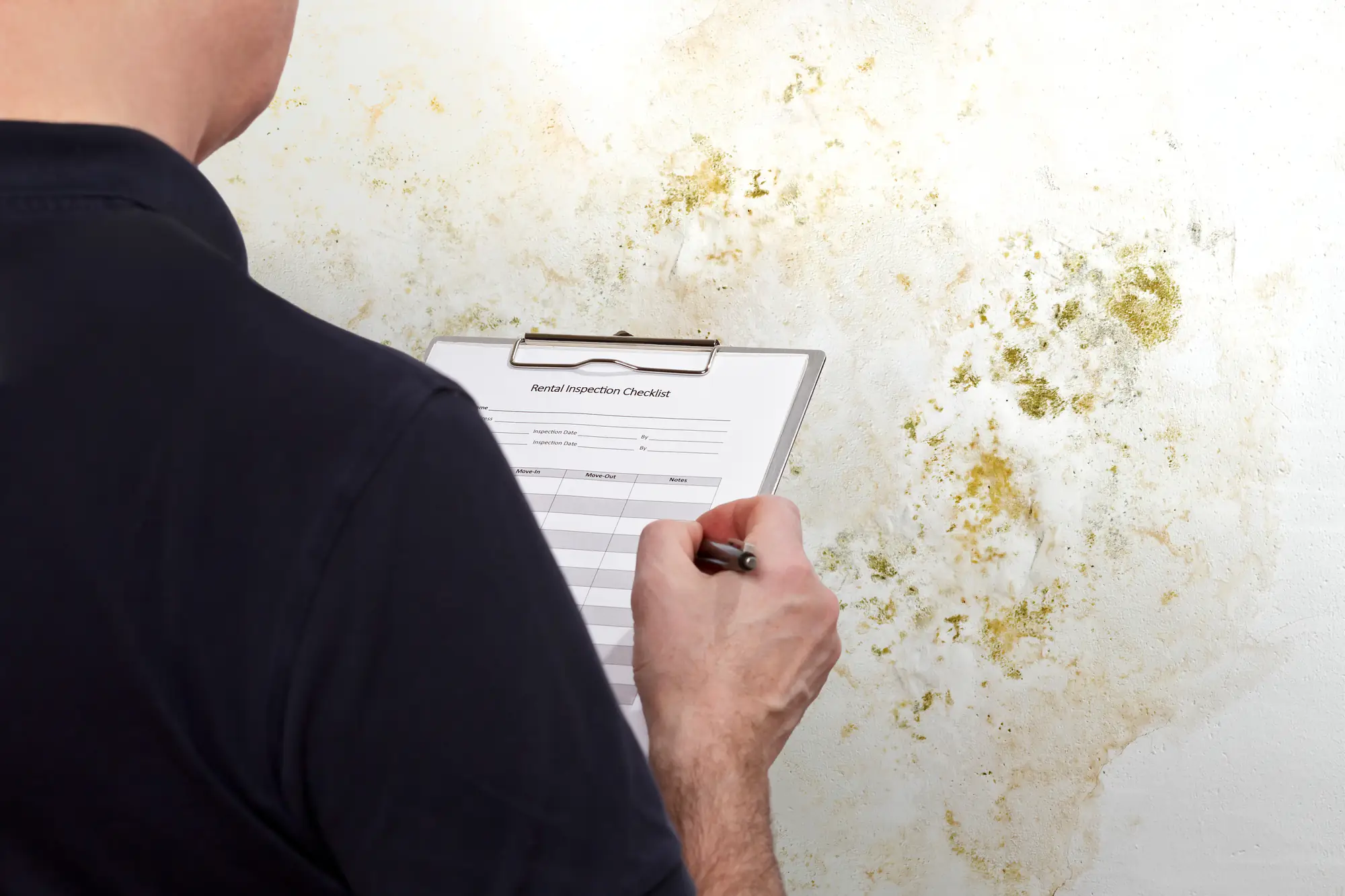
First, we do a visual inspection of your property. We’re looking for obvious signs of water damage, discoloration, and moisture accumulation. But we’re also checking the places most people miss—behind appliances, inside HVAC systems, under sinks, and in attic spaces.
Next comes the actual testing. We use three main methods depending on what your home needs. Air sampling captures spore counts in your indoor environment and compares them to outdoor baseline levels. Surface sampling uses tape lifts and swabs to test visible growth or suspicious areas. Bulk sampling takes physical material samples when we need to identify what’s growing inside walls or building materials.
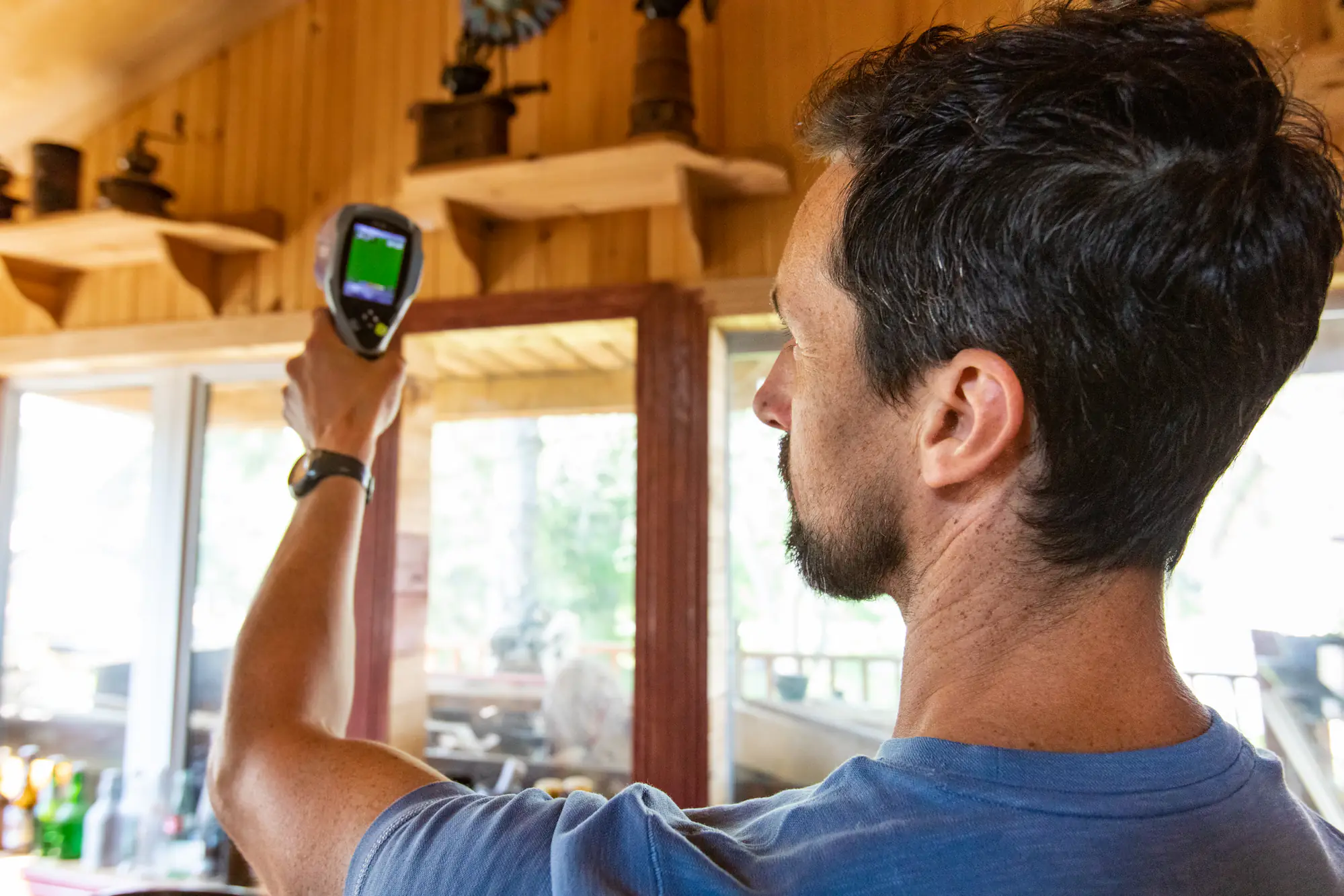
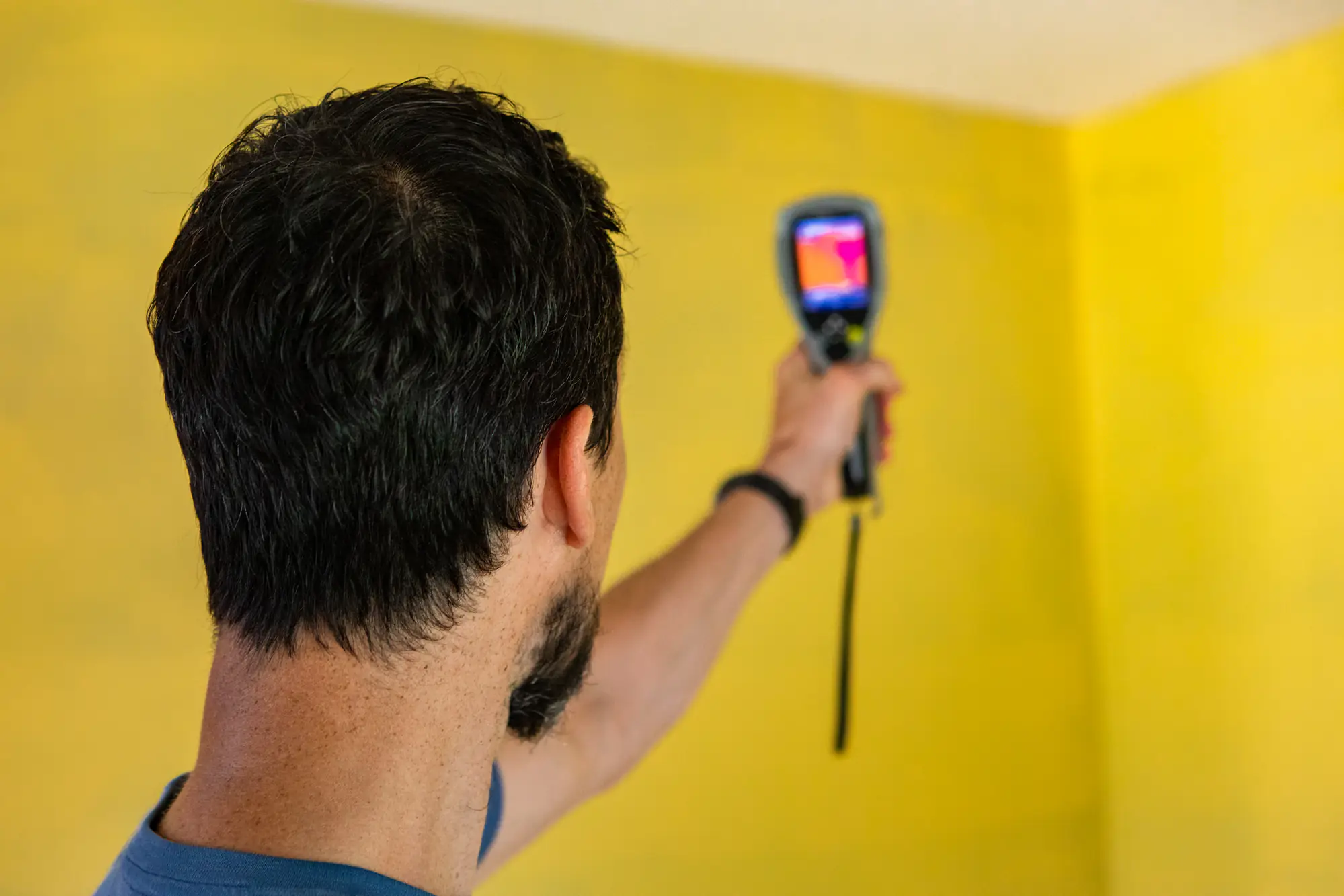
Our equipment gets calibrated daily. We use thermal imaging cameras to spot temperature variations that indicate moisture problems. Moisture meters give us exact readings on building materials. Laser particle counters measure air quality in real time.
All samples go to independent, nationally recognized labs for analysis. You’re not waiting weeks—most results come back within 48 to 72 hours. The lab report identifies specific mold species, spore concentration levels, and potential health risks based on what’s actually growing in your home.
Then we walk you through the results. You get a detailed report that meets Pennsylvania Department of Health standards and insurance documentation requirements. More importantly, you get clear recommendations on what needs to happen next—scaled to your specific situation, not padded with unnecessary work.
Ready to get started?
Your mold testing service includes a complete property assessment using professional-grade detection equipment. That means thermal cameras, calibrated moisture meters, and air quality monitors—not the consumer-grade tools you’d rent from a hardware store.
You get multiple testing methods based on your home’s specific situation. Air sampling is standard for most residential mold testing because it captures what you’re actually breathing. If we spot visible growth or water damage, we’ll add surface or bulk sampling to identify exactly what species you’re dealing with.
Lab analysis comes from EPA-certified facilities that specialize in fungal identification. The results tell you species names, concentration levels, and whether you’re looking at toxic varieties like Stachybotrys (black mold) or more common species like Aspergillus and Penicillium.
Oxford Valley homes face specific challenges. The area’s mix of older housing stock and newer construction means moisture problems look different from property to property. Homes near the Delaware River or in lower-lying areas deal with higher humidity and occasional flooding. Properties built before modern building codes often lack proper vapor barriers and ventilation.
Your inspection accounts for these local factors. We’re not running a generic checklist—we’re applying years of experience with Bucks County properties to find problems specific to your home’s age, construction type, and location.
Documentation meets Pennsylvania’s strict indoor air quality regulations. If you’re buying or selling a home, dealing with an insurance claim, or need records for legal purposes, your report includes everything required by state health codes and industry standards.
Most residential mold testing in Oxford Valley runs between $300 and $600 depending on your home’s size and how many samples we need to collect. A typical single-family home with suspected mold in one area usually falls around $400 to $450.
That price includes the on-site inspection, sample collection, laboratory analysis, and a detailed report with remediation recommendations. If your home needs extensive testing across multiple areas or requires specialized sampling methods, costs can go higher.
Here’s the thing—spending $400 on testing can save you thousands in remediation costs. Early detection means smaller affected areas and less structural damage. Catching mold before it spreads behind walls or into your HVAC system keeps the problem manageable. Many homeowners skip testing to save money, then end up paying $2,200 or more for remediation that could have been prevented or minimized with early professional assessment.
Home testing kits will tell you that mold exists—which you probably already know if you’re seeing growth or smelling that musty odor. What they won’t tell you is what species you’re dealing with, how concentrated the spore levels are, or where the moisture source is that’s feeding the problem.
Professional mold testing uses calibrated equipment and follows specific protocols that DIY kits can’t match. We’re testing multiple locations, comparing indoor levels to outdoor baselines, and using thermal imaging to find hidden moisture you can’t see. The samples go to certified labs that can identify specific species and provide concentration levels that actually mean something.
Pennsylvania requires licensing for professional mold assessment because proper testing requires training and expertise. Mold grows in hidden areas that most homeowners miss—inside wall cavities, under flooring, in HVAC ductwork. A surface test kit won’t catch those problems. If you’re dealing with health symptoms, preparing for a real estate transaction, or need documentation for insurance, home kits won’t provide the certified results those situations require.
Aspergillus and Penicillium are the most common mold species we find in Oxford Valley and throughout Bucks County. Both thrive in Pennsylvania’s humid climate and grow on common building materials like drywall, wood, and insulation. They’re usually not as dangerous as black mold, but they still cause respiratory issues, allergic reactions, and property damage.
Stachybotrys chartarum—what most people call black mold—shows up in homes with serious water damage or chronic moisture problems. It grows on materials with high cellulose content like drywall and wood when they stay wet for extended periods. Black mold produces mycotoxins that can cause severe health issues, especially in children and people with compromised immune systems.
Cladosporium appears frequently in damp areas like bathrooms, basements, and around windows where condensation builds up. Alternaria grows in water-damaged areas and is one of the most common triggers for mold allergies. The specific species in your home matters because it affects both the health risks and the remediation approach. That’s why lab identification is important—knowing what you’re dealing with determines how aggressively you need to address the problem.
The on-site inspection and sample collection usually takes two to three hours for an average-sized home. That time includes the visual assessment, moisture readings, thermal imaging, and collecting air or surface samples from multiple locations throughout your property.
Lab analysis takes 48 to 72 hours in most cases. The samples go to independent facilities that culture the specimens and use microscopy to identify species and count spore concentrations. Rush processing is available if you’re in a time-sensitive situation like a real estate closing, but standard turnaround is typically three business days.
Once results come back, we schedule a follow-up consultation to review the findings and discuss recommendations. That conversation usually takes 30 to 45 minutes. You’ll get a written report that breaks down what we found, where we found it, what it means for your health and property, and what steps you should take next. From your first call to having results in hand, the entire process typically wraps up within one week.
Insurance coverage for mold testing depends on what caused the mold growth. If the mold resulted from a covered event—like a burst pipe, roof leak from storm damage, or appliance malfunction—many policies will cover both testing and remediation costs.
If the mold developed from long-term maintenance issues like poor ventilation, chronic condensation, or neglected repairs, insurance typically won’t cover it. Most policies exclude mold damage that results from lack of maintenance or gradual deterioration.
Your best approach is to contact your insurance company before scheduling testing. Explain the situation and ask specifically about mold testing coverage under your policy. Get the answer in writing if possible. Some insurers require you to use their preferred testing companies or follow specific protocols to maintain coverage. If your claim gets approved, professional testing documentation becomes critical evidence for the remediation claim. The detailed lab reports and inspection findings we provide meet insurance requirements and give you the documentation needed to support your claim.
Persistent respiratory issues are the biggest red flag. If you or your family members have developed chronic coughing, wheezing, shortness of breath, or sinus congestion that doesn’t respond to normal treatment, mold exposure could be the cause. These symptoms often get worse when you’re home and improve when you’re away for extended periods.
Headaches and fatigue that seem to have no medical explanation are common with mold exposure. Skin irritation, eye redness, and throat irritation that persist despite medication also point to potential indoor air quality problems. Children are especially vulnerable—studies show kids exposed to household mold have a 40% higher risk of developing asthma compared to those in mold-free homes.
If anyone in your household has asthma and their symptoms have gotten worse or harder to control, mold could be triggering attacks. People with compromised immune systems, elderly family members, and anyone with existing respiratory conditions face higher risks from mold exposure. The health symptoms alone justify testing, but combine those with visible signs like water stains, musty odors, or previous water damage, and testing becomes urgent. Mold can start growing within 24 to 48 hours after water exposure, so timing matters when you’re dealing with health effects.
Other Services we provide in Oxford Valley